Salt, sun, and storm surge are tough on waterfront structures. If you own a home on the water in Hatteras, your dock and bulkhead face daily wear and fast-changing conditions. You want safe access for your boat, a shoreline that holds, and a property that keeps its value. This guide shows you how to stay ahead of upkeep, when permits apply, and who to call for help so you can avoid costly surprises.
You will find local permitting basics, inspection checklists, repair options, a seasonal plan, and budgeting tips tailored to Hatteras. Let’s dive in.
Permitting basics in Hatteras
Coastal work in Hatteras usually involves state and sometimes federal review. The North Carolina Division of Coastal Management implements the Coastal Area Management Act (CAMA), which governs docks, bulkheads, dredging, and fill in coastal areas. Many projects also need federal authorization from the U.S. Army Corps of Engineers.
- For state guidance, start with the North Carolina Division of Coastal Management.
- For local requirements, check Dare County Planning & Development.
- For federal permits under Section 10 and Section 404, see the U.S. Army Corps of Engineers Wilmington District Regulatory Program.
Common triggers to confirm
- New docks or expansions into estuarine waters typically require a CAMA permit and often USACE authorization.
- Bulkhead construction or replacement along sound-side shorelines usually needs CAMA review.
- Dredging or placing fill almost always requires both state and federal authorization.
- Small, in-kind repairs may qualify for exemptions, but thresholds vary. Always confirm with Dare County and NCDCM before starting work.
If your site has submerged aquatic vegetation or shellfish resources, the NC Division of Marine Fisheries may add conditions or timing windows. Learn more at the NC Division of Marine Fisheries.
Start early on permits
Permitting can take weeks to months depending on complexity, surveys, public notices, and environmental reviews. Plan ahead if you want work complete before boating season or hurricane season. Some projects need engineer-stamped drawings, tidal data, and environmental assessments. The agencies listed above will clarify what to submit.
What to inspect and when
In a saltwater environment, small issues turn into big problems quickly. Use a simple cadence:
- Homeowner checks: monthly to every other month in spring through fall, and after any significant storm or unusually high tide.
- Professional inspection: annually and after major storms by a qualified marine contractor or coastal engineer. If the bulkhead shows distress, consult a licensed engineer.
Dock inspection checklist
- Piles: Look for leaning, wobble, vertical movement, or scour at the base. Check the waterline for rot and signs of marine borers.
- Decking and joists: Note spongy boards, sagging, cracks, or loose fasteners.
- Fasteners and hardware: Inspect for corrosion on bolts, hangers, and brackets. Replace with marine-grade hardware when needed.
- Floatation: Confirm floats hold buoyancy and attachment points are sound.
- Boatlifts: Test hoists and gearboxes. Look for frayed cables and worn pulleys. Confirm lift supports and guide piles are secure.
- Electrical: Verify GFCI protection, intact conduit, and no exposed conductors. Hire a licensed electrician for any testing or repairs.
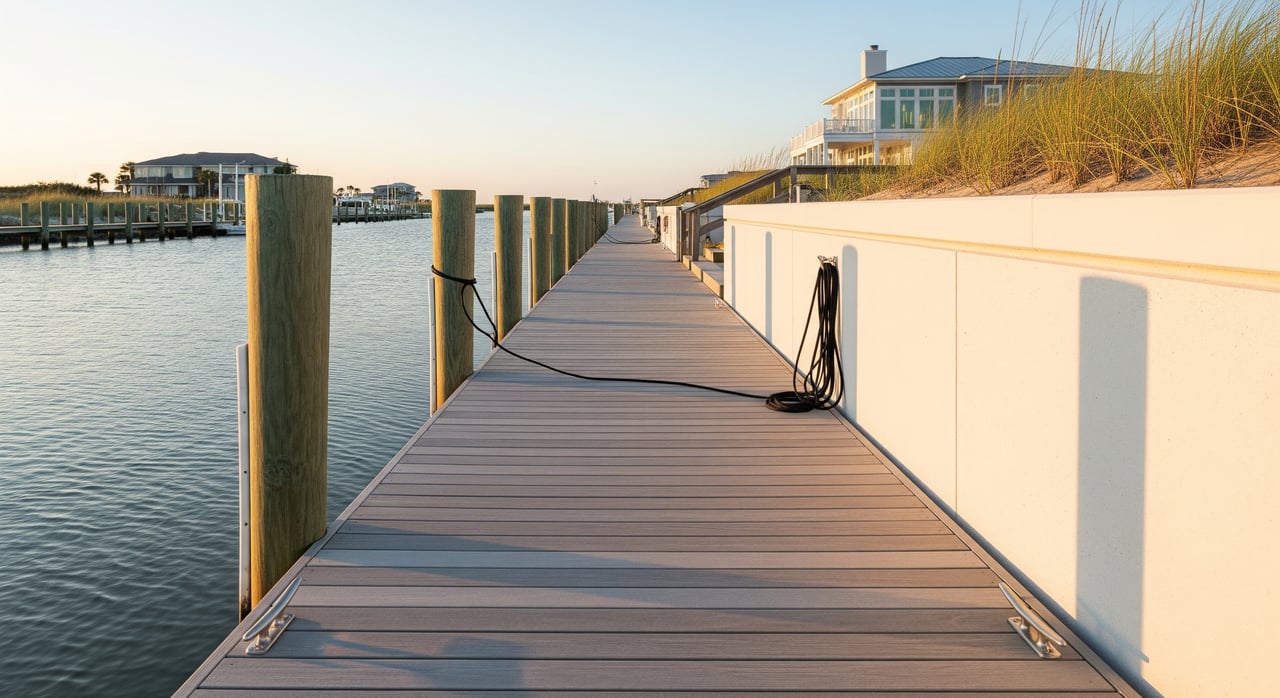
- Access and safety: Check handrails, non-slip surfaces, cleats, and lighting. Remove tripping hazards.
Bulkhead and seawall checklist
- Alignment: Scan for leaning, bulging, or bowing panels.
- Toe and scour: Look at the base for undermining or washout.
- Backfill: Watch for sinkholes, settlement, or new soft spots behind the wall.
- Drainage: Make sure weep holes are open and working. Water pressure behind the wall can cause failure.
- Tiebacks and caps: Check for corrosion, cracked caps, or signs of failing anchors.
- Vegetation and burrows: Large roots and burrowing animals can weaken backfill.
Red flags to act on now
- New lean in piles or a bulkhead, or sudden movement after a storm.
- Exposed pile toes or obvious undermining.
- Fresh seepage, sinkholes, or slumping behind a bulkhead.
- Broken tiebacks or visible anchor failures.
- Severe rot or missing fasteners at critical connections.
- Electrical sparking, tripped breakers, or exposed wiring near water. Disconnect power and call an electrician.
Repair and upgrade options
Choosing the right repair depends on extent, materials, and exposure. Your contractor and engineer will advise based on site conditions and permit pathways.
In-kind and minor repairs
For small areas, you might replace rotten boards, isolated piles, or hardware in kind. These repairs may qualify for exemptions, but always confirm thresholds with Dare County and NCDCM.
Partial or full replacement
If damage is widespread or structural, you may need to replace caps, sections of a bulkhead, or the entire system. Large rebuilds typically require engineering and CAMA and USACE permits. Your team will weigh access needs, construction methods, and environmental constraints.
Materials that hold up in Hatteras
- Wood: Pressure-treated lumber is common and cost-effective but vulnerable to marine borers over time. Use marine-grade hardware.
- Steel sheet piling: Very strong; requires corrosion protection and coatings.
- Vinyl sheet piling: Corrosion resistant and lower maintenance; performance varies by loading and site energy.
- Concrete: Durable and long-lasting with proper design; may require heavier equipment and staging.
- Floating dock setups: Composite decking, polyethylene floats, and stainless or hot-dipped galvanized hardware are recommended.
Living shoreline alternatives
Living shorelines use plants, organic materials, and sometimes low rock sills to reduce erosion while supporting habitat. They are encouraged by agencies in suitable settings and can boost long-term resilience. Explore the concept with NOAA’s living shorelines overview and local guidance from NC Sea Grant. These projects still go through CAMA review, and your team will design around wave energy, exposure, and access.
Who to hire for coastal work
Your best outcome comes from a team that knows Hatteras conditions and the permit process.
- Licensed marine/dock contractor: Handles inspections, repairs, and construction. Many also serve as permit agents.
- Coastal or structural engineer: Designs bulkheads, major repairs, and provides stamped plans for permit submittals.
- Licensed electrician: Installs and maintains shore power, lighting, and boatlift wiring with GFCI protection.
- Surveyor: Confirms property lines and mean high water for accurate plans and setbacks.
Ask for North Carolina licenses, local references, and insurance certificates. Confirm upfront who will manage agency coordination and documentation.
Seasonal upkeep plan for Hatteras
A simple routine can extend service life and reduce surprises.
Early spring: get ready for the season
- Do a full visual inspection of piles, decking, rails, and hardware.
- Replace suspect fasteners and boards. Address small issues before they grow.
- Test and lubricate lift components; inspect cables and winches.
- Have a licensed electrician test circuits and GFCIs if anything looks off.
- Check floats for cracks and leaks. Adjust alignment and clear debris.
- Photograph conditions and create a repair list.
Mid-summer: monitor and maintain
- Watch for marine borer activity and accelerated corrosion.
- Tighten loose fittings. Re-treat exposed wood if compatible with permits.
- Inspect mooring lines, cleats, and safety fittings.
Early fall: storm-season prep
- Secure or remove loose items. Raise or secure boatlifts if the design allows.
- Recheck critical fasteners and pile stability.
- Keep permit files and documentation handy for possible claims.
- Trim nearby trees or limbs that could impact the dock.
After a major storm
- Assess from shore first. Do not step onto a compromised structure.
- Photograph all damage before cleanup for insurance and permitting records.
- Report significant structural damage if required and ask agencies about emergency repair allowances.
- Call contractors and engineers quickly for stabilization and next steps.
Budget, insurance, and planning
Coastal projects vary widely in cost. Get multiple local quotes with clear scopes.
Key cost drivers
- Materials: wood vs. steel, vinyl, or concrete.
- Access and equipment: barges, cranes, staging areas, and debris disposal.
- Scope: patch repairs vs. partial or full replacement.
- Soft costs: surveys, engineering, permit fees, and potential mitigation.
- Timing: peak seasons in the Outer Banks can affect pricing and scheduling.
Insurance and claims
- Document pre-storm conditions with dated photos and keep maintenance logs.
- Review your policy for coverage of docks, bulkheads, and lifts. Many policies exclude certain coastal damages unless you add endorsements.
- Coordinate emergency stabilization with your insurer and confirm any required permits or reporting.
Plan for resilience
- Discuss living shoreline or hybrid solutions if your site is suitable. These can reduce erosion while supporting habitat.
- Schedule major renewals on a realistic lifecycle. In saltwater, wooden structures have limited service life, especially with storm exposure. Budget for eventual replacement and include permit timelines in your plan.
How upkeep supports property value
Well-maintained waterfront infrastructure helps protect shoreline stability, safe access, and curb appeal. If your home doubles as a vacation rental, reliable dock access and a secure shoreline can strengthen guest confidence and booking potential. Proactive inspections, documented repairs, and permit compliance also reduce the risk of sale delays when buyers and inspectors review your records.
If you are weighing repairs versus replacement, or considering design choices that balance lifestyle and long-term costs, a local strategy can help you plan upgrades that support future resale and rental performance.
Ready to align your upkeep plan with your long-term ownership goals in Hatteras? Book a Free Consult & Rental Analysis with Unknown Company.
FAQs
Do I need a CAMA permit for dock work in Hatteras?
- Most new docks, expansions, bulkhead projects, and any dredging or fill require CAMA review, and many also require USACE authorization. Always confirm with Dare County and NCDCM before starting.
How often should I inspect my dock and bulkhead?
- Do homeowner checks monthly to every other month during spring through fall and after storms, and schedule a professional inspection annually and after major storms.
What are signs my bulkhead is failing?
- Leaning or bulging panels, toe scour or undermining, new sinkholes or settlement behind the wall, fresh seepage, and signs of failing tiebacks are red flags.
Are living shorelines allowed in Hatteras?
- Yes, living shorelines are encouraged in suitable settings but still require design and CAMA review; your team will consider wave energy, exposure, and access during permitting.
How long do docks and bulkheads last in saltwater?
- Lifespan depends on materials, exposure, maintenance, and storm impacts; plan for periodic major repairs or replacement and confirm local expectations with qualified contractors and engineers.