If you are dreaming about owning your first Outer Banks rental, Rodanthe probably stands out for a reason. It offers a quieter coastal setting, strong beach appeal, and a niche identity that feels very different from the busier northern Outer Banks markets. If you are trying to decide whether that mix works for your goals, this guide will help you weigh the opportunity, the tradeoffs, and the practical realities before you buy. Let’s dive in.
Rodanthe at a glance
Rodanthe is a small, unincorporated village on Hatteras Island in Dare County. It is part of the Tri-Village area with Waves and Salvo, and it is known for a laid-back, nature-focused coastal atmosphere.
For many first-time rental buyers, that setting is the biggest draw. Rodanthe appeals to guests who want beach access, water sports, and a slower pace rather than a highly built-up vacation town with lots of commercial activity.
Rodanthe rental market basics
Public short-term rental data points to a small but productive market. AirDNA reports about 351 active listings in Rodanthe, with 62% occupancy, average annual revenue of $63.8K, and an average daily rate of $673.4.
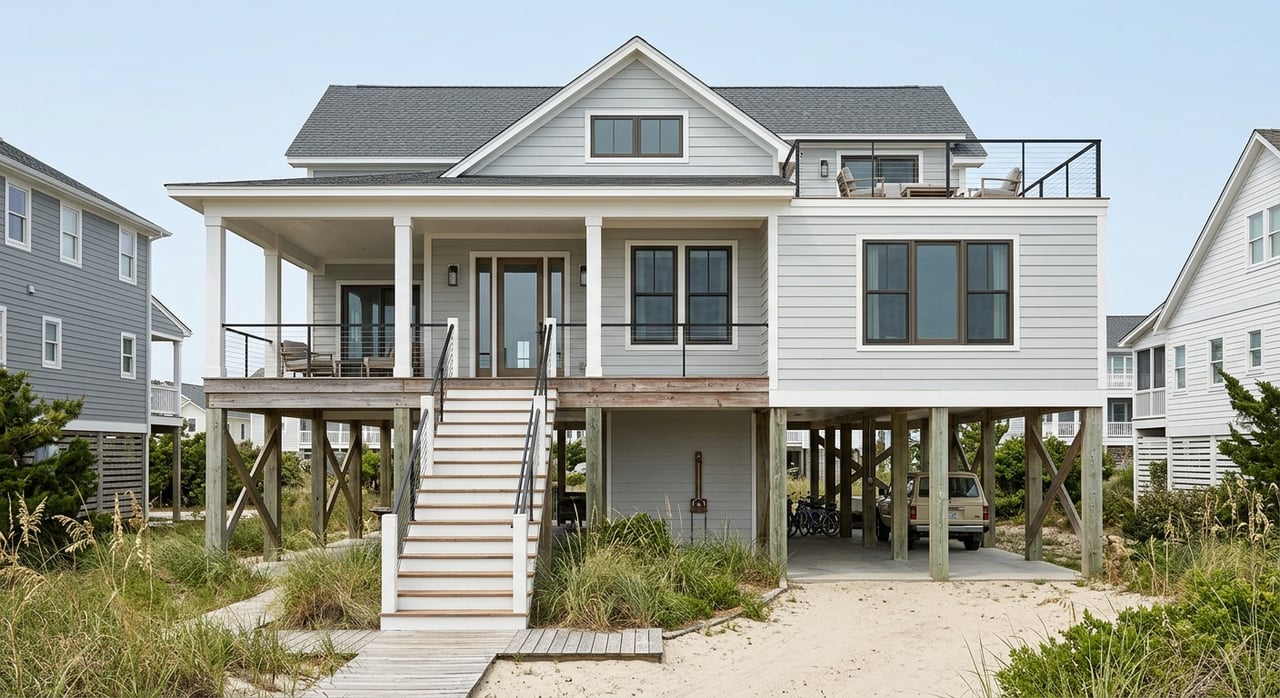
The inventory is also very home-focused. About 96% of listings are entire-home rentals, and a large share of the market leans toward bigger properties rather than smaller condo-style options.
That matters if you are buying your first rental. In Rodanthe, your competition is not a huge field of mixed inventory. It is mostly whole-house vacation rentals, and many of them are built for larger groups.
Property sizes skew larger
Rodanthe is not a market dominated by one- and two-bedroom vacation homes. AirDNA shows that 41% of listings have 5 or more bedrooms, 20% have 4 bedrooms, and 15% have 3 bedrooms.
Smaller homes exist, but they are less common. That can shape both your budget and your rental strategy from day one.
Use rental data as a screening tool
If you are a first-time investor, it is smart to treat public revenue and occupancy figures as a starting point, not a final answer. The AirDNA figures reflect estimates from active listings, so they can help you compare markets, but they should not replace property-specific underwriting.
That is especially important in a place like Rodanthe, where location, beach access, condition, oceanfront exposure, and home size can all create big differences in performance.
How Rodanthe compares to nearby Hatteras Island markets
One of the most useful ways to evaluate Rodanthe is to compare it with nearby villages. Based on the public market data in the research, Rodanthe fits within the Hatteras Island rental cluster rather than the larger, more inventory-heavy northern Outer Banks markets.
Here is the quick picture:
| Market | Active Listings | Occupancy | Avg. Annual Revenue | ADR |
|---|---|---|---|---|
| Rodanthe | 351 | 62% | $63.8K | $673.4 |
| Waves | 118 | 61% | $74.4K | $694.9 |
| Salvo | 380 | 62% | $70.5K | $804.3 |
| Avon | 865 | 64% | $57.3K | $578.2 |
| Corolla | 2,187 | 60% | $41.6K | $615.0 |
For you as a buyer, the takeaway is simple. Rodanthe is a more niche market than Corolla, and it behaves more like a Hatteras Island destination built around beach stays, repeat visitors, and larger home rentals.
What drives rental demand in Rodanthe
Rodanthe has a clear vacation identity, and that is a positive for many first-time investors. Guests are drawn by the beach, the natural setting, and the area’s reputation for surfing, kiteboarding, and windsurfing.
The Rodanthe Public Beach Access is a major convenience point in the area. It includes 97 parking spaces, a bathhouse, showers, an ADA boardwalk, and seasonal lifeguards from the Saturday before Memorial Day through Labor Day.
That kind of access matters because it supports the practical side of a beach trip. For guests, easy beach access can make the stay feel simpler and more appealing.
Nature and history help widen appeal
Rodanthe is not just a summer beach stop. Pea Island National Wildlife Refuge, just north of the village along N.C. 12, adds appeal for birdwatching, fishing, trails, and beach access.
The refuge also sees strong birding activity in fall and winter, which helps explain why demand can extend beyond peak summer weeks. Chicamacomico Life-Saving Station adds another layer, with original station buildings, museum exhibits, and special summer programs and events.
For you as an owner, that broader interest can matter. It supports a rental story that is not limited to one type of guest.
Seasonality is still a key part of the equation
Rodanthe is still a summer-heavy market. Beach vacations drive the core rental season, and the area’s identity is strongly tied to warm-weather travel.
At the same time, shoulder seasons may appeal to surfers, anglers, birders, and repeat Outer Banks visitors looking for a quieter trip. That does not erase seasonality, but it can add depth to the booking calendar.
What daily ownership looks like in Rodanthe
Rodanthe works best when you go in with a realistic picture of operations. The village sits on the N.C. 12 corridor, and access has improved with the Rodanthe Jug Handle Bridge, which opened in 2022 as a long-term transportation solution bypassing the vulnerable S-curves.
Still, N.C. 12 remains a road that can see storm damage and periodic closures. NCDOT is continuing to evaluate longer-term access improvements for the corridor, which tells you this is an area where transportation resilience remains an ongoing issue.
Amenities are modest but functional
If you are comparing Rodanthe to larger beach towns, you will notice the difference right away. Local infrastructure includes a public pier, boating access on Myrna Peters Road, a community building with a skatepark, pavilion, playground, basketball court, and pickleball court, plus EMS, fire service, recycling, county water service, and county trash collection.
That is enough to support day-to-day use, but it is not a highly commercial environment. Local tourism sources describe Rodanthe as a place with very little commercialism and no built-up cluster of restaurants, shops, or attractions typical of more developed beach towns.
For some guests, that is exactly the point. For others, it may feel too quiet.
Tax and compliance matter
As a short-term rental owner, you also need to plan for Dare County’s 6% occupancy tax on transient rentals, which is filed monthly. Since Rodanthe is unincorporated, Dare County handles land-use planning and state building-code enforcement in this area.
For a first-time buyer, that means your due diligence should include both the property itself and the local operating framework. A great rental market fit on paper still needs to make sense from a compliance and ownership standpoint.
The biggest risks to weigh carefully
If you are considering Rodanthe for your first Outer Banks rental, this is the section you cannot skip. The biggest long-term concern is shoreline erosion.
Dare County states that erosion is occurring at a very rapid rate in Rodanthe. The county also says no beach nourishment projects are currently planned there because of funding constraints, and the small local population limits the tax base available to support a project of that scale.
Oceanfront risk is real
Dare County and the National Park Service have reported threatened oceanfront structures, house collapses, debris events, and beach closures near vulnerable sections of Rodanthe and Salvo. That can affect guest experience, operating consistency, and long-term ownership decisions.
This does not mean every property carries the same level of risk. It does mean you should be especially careful when evaluating oceanfront or highly exposed homes.
Access risk also affects the ownership experience
Even with the Jug Handle Bridge in place, this part of the coast still deals with weather-related access concerns. If roads close or travel is disrupted, that can impact turnover logistics, guest arrivals, and your comfort level as an owner.
For a first-time investor, those factors are worth taking seriously. A strong rental identity is valuable, but resilience matters too.
Who Rodanthe fits best
Rodanthe can be a strong fit if you want a beach-oriented rental with a quieter setting and a very specific Outer Banks personality. It also makes sense if you are comfortable with a market where larger homes are common and where guests are often looking for a house-style vacation experience.
In practical terms, Rodanthe may fit you well if you want:
- A niche Hatteras Island market rather than a large, high-inventory northern OBX market
- A rental with strong summer appeal
- Access to beach, nature, and watersports demand drivers
- A quieter village setting with limited commercial buildout
- A home that can compete in a market with many 4- and 5-bedroom rentals
When Rodanthe may not be the right first buy
Rodanthe may be a weaker fit if you want more year-round convenience, lower shoreline uncertainty, or a market with broader commercial infrastructure. It can also be a challenge if you are hoping for a simple entry point through smaller, lower-maintenance inventory, since the market skews toward larger homes.
You may want to look more broadly if your priorities include:
- Dense dining and shopping options nearby
- Lower exposure to shoreline erosion concerns
- Easier year-round access and less storm-related uncertainty
- A wider mix of inventory types and price points
A smart way to evaluate your first Rodanthe rental
If Rodanthe is on your shortlist, the best next step is not to ask whether the village is good or bad for rentals. The better question is whether a specific property matches your budget, your risk tolerance, and your rental goals.
A careful first-rental evaluation should look at:
- Property size and how it fits local guest demand
- Beach access and location within the village
- Exposure to erosion and oceanfront risk
- Condition, layout, and guest appeal
- Access logistics on N.C. 12
- The difference between public market averages and true property-level performance
That is where local guidance becomes especially valuable. In a niche coastal market, the right buy is usually less about headlines and more about choosing the right house on the right site for the right reason.
If you are thinking about buying your first Outer Banks rental and want help sorting through Rodanthe versus other OBX options, Crystal Swain can help you evaluate the numbers, the lifestyle fit, and the on-the-ground realities with a practical rental-focused lens.
FAQs
Is Rodanthe, NC a good place for a first Outer Banks rental?
- Rodanthe can be a good fit if you want a quieter beach market with strong summer demand, larger home inventory, and a nature-focused setting, but it may be less ideal if you want lower shoreline risk or more commercial amenities.
What kind of vacation rentals are most common in Rodanthe, NC?
- Public short-term rental data shows Rodanthe is dominated by entire-home rentals, and a large share of listings have 4 or more bedrooms.
What are the biggest risks of owning a rental in Rodanthe, NC?
- The biggest risks in Rodanthe include rapid shoreline erosion, threatened oceanfront structures in vulnerable areas, debris and beach closure events, and periodic access issues along N.C. 12.
Does Rodanthe, NC have strong rental demand beyond summer?
- Rodanthe is generally summer-heavy, but beach recreation, birding, fishing, surfing, and repeat Outer Banks travel can support some shoulder-season demand.
What amenities should buyers expect in Rodanthe, NC?
- Rodanthe offers functional local infrastructure like beach access, a public pier, boating access, community recreation amenities, county water, trash collection, and emergency services, but it is a quiet area with limited commercial development.
Who handles planning and occupancy tax for rentals in Rodanthe, NC?
- Because Rodanthe is unincorporated, Dare County handles land-use planning and building-code enforcement there, and Dare County also imposes a 6% occupancy tax on transient rentals that is filed monthly.