Is your ideal Outer Banks morning stepping off your deck and onto the sand, or taking a quick stroll across the street with a beach cart in tow? If you are weighing oceanfront against semi‑oceanfront in Kill Devil Hills, you are choosing between two great versions of coastal life. Each offers a different balance of access, rental potential, and long‑term ownership costs. In this guide, you will learn how the two compare on price signals, beach access, rental performance, and risk so you can choose with confidence. Let’s dive in.
Oceanfront vs semi‑oceanfront defined
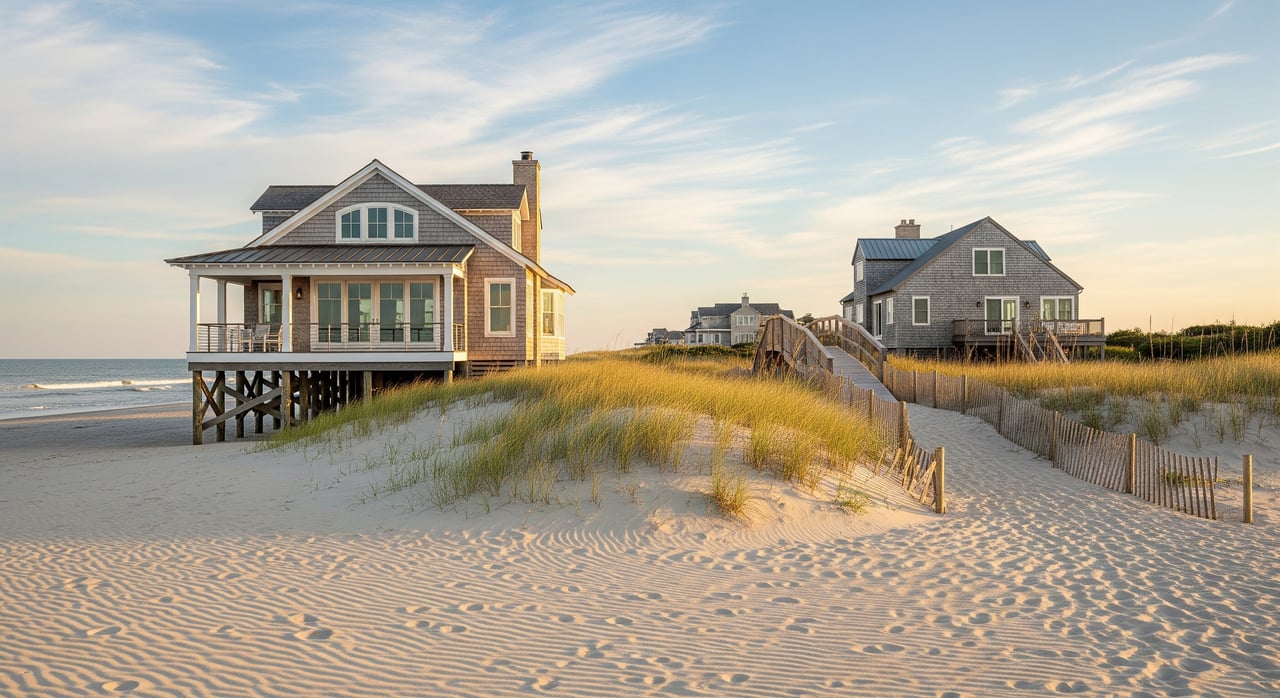
Oceanfront in Kill Devil Hills means a property that directly fronts the primary dune line with immediate line‑of‑sight and physical access to the Atlantic. Many have a private walkway or an immediate dune crossover.
Semi‑oceanfront (often called second row or ocean view) sits one or a few lots back from the dune. You may still have strong views, but access typically means crossing a road, walkway, or a lot to reach the public or deeded crossover.
Kill Devil Hills is laid out with many streets running parallel to the shoreline, and most homes face east for sunrise views. Second‑row parcels are commonly separated from the dune by a coastal access road or a single row of lots.
Price and value signals
Oceanfront homes typically command a meaningful premium over comparable semi‑oceanfront properties because of direct access, views, and scarcity. The exact premium varies by micro‑neighborhood, lot size, elevation, structure condition, and amenities like pools, elevators, and parking.
If you are comparing two homes, focus on: square footage and bedroom count, recent renovations, outdoor living space, parking, and buildable footprint. These can outweigh location alone.
To understand current pricing, request 12 to 24 months of sold comps and price‑per‑square‑foot comparisons for the specific block or neighborhood. Local data sources to consult include the Outer Banks Association of REALTORS market reports, Dare County property records, and up‑to‑date summaries from local brokers. Use national portals for directional trends only, then verify with local MLS data.
Beach access and daily life
Access is the first daily difference you will feel.
- Oceanfront: You have immediate dune access. Morning coffee walks and sunset surf checks are easy. Fewer road crossings mean simpler logistics for kids and guests carrying gear.
- Semi‑oceanfront: Your walk is still short, but you will typically cross a road or boardwalk. Clear access details help guests plan for chairs, coolers, and strollers.
Views and sound add to the experience:
- Oceanfront: Uninterrupted views and the sound of surf dominate. You usually have less street traffic in front, but more exposure to wind and salt spray.
- Semi‑oceanfront: Views can be partial or framed by neighboring homes or vegetation. You often get a bit more shelter from wind, with more nearby parking or road activity.
Kill Devil Hills maintains multiple public accesses, boardwalks, and designated parking. A deeded or private walkway can be a standout amenity for both lifestyle and rental marketing.
Storm exposure is also part of the equation. Oceanfront lots face higher direct exposure to storms and long‑term erosion. Before you buy, confirm recent shoreline movement, any beach nourishment projects, and whether the lot is inside a managed dune area or setback.
Rental performance and operations
Outer Banks rentals are seasonal. Summer generates most of the revenue, while spring and fall can be solid shoulder seasons. Winter is typically low.
- Oceanfront often earns higher nightly rates and stronger peak‑season demand because it is a premium experience. Guest expectations for immediate access and panoramic views are high, so your listing should match with accurate photos and access details.
- Semi‑oceanfront can still perform very well with the right package of amenities, design upgrades, and competitive pricing. Pools, hot tubs, game rooms, and strong reviews help close the gap on occupancy.
Costs affect net results too:
- Oceanfront owners should plan for higher insurance, more frequent exterior maintenance, and potentially higher utilities. Gross revenue is often higher, but expenses can be too.
- Semi‑oceanfront usually has more moderate insurance and maintenance exposure, which can translate to a similar or even higher net yield despite lower gross revenue.
For your pro forma, gather ADR and occupancy benchmarks from professional short‑term rental analytics providers or local property managers. Confirm your local obligations as well, including Dare County occupancy taxes and any Town of Kill Devil Hills rules for safety, registration, noise, or occupancy.
Insurance, permitting, and risk
Many oceanfront and lower‑lying semi‑oceanfront properties are in FEMA flood zones where lenders require flood insurance. Oceanfront parcels commonly fall in V/VE or AE/V zones, which carry higher premiums and stricter building and elevation requirements. Windstorm coverage is a major cost across coastal North Carolina and often comes with higher deductibles for oceanfront homes.
Obtain insurance quotes early. Premiums can materially change cash‑flow projections and debt‑to‑income calculations.
Check the FEMA Flood Insurance Rate Map status for the parcel and, if available, an elevation certificate. These determine mandatory flood coverage and influence rebuild and improvement options.
North Carolina’s Coastal Area Management Act (CAMA) and local permitting control setbacks, dune protection, and reconstruction standards. After damage or during renovation, you may need to build to updated codes, elevations, and footprints. Factor in permit timelines if you plan improvements.
Lenders may require higher down payments, additional reserves, and proof of insurability for oceanfront purchases. Appraisals can be sensitive where comparable sales are limited, especially for one‑of‑a‑kind oceanfront homes.
A practical buyer checklist
Pre‑offer investigations:
- Pull recent oceanfront and semi‑oceanfront comps in the same micro‑area of Kill Devil Hills for 12–24 months.
- Confirm FEMA flood zone and request an elevation certificate if available.
- Ask for prior insurance premiums and any claims history.
- Review shoreline and erosion history, any dune or bulkhead work, and recent or planned nourishment projects.
- Verify utilities, including septic versus municipal sewer and water, and any service limitations.
- Confirm HOA rules, deeded access easements, and covenants that affect rentals or improvements.
Financial modeling:
- Build a 12‑ and 36‑month pro forma with peak, shoulder, and winter revenue assumptions.
- Use local ADR and occupancy data for benchmarks; stress‑test conservative and aggressive scenarios.
- Include property management fees, cleaning, utilities, real estate taxes, insurance, routine repairs, and capital reserves.
Post‑offer steps:
Order a whole‑home inspection plus coastal‑specific checks for structure, decks, siding, roofing, HVAC, and septic.
Get binding insurance quotes for wind, flood, and liability that meet lender requirements.
Consult a local property manager on positioning, rate strategy, and projected net income.
For potential sellers:
- Document your oceanfront premium with deeded access details, recent renovations, and insurance history.
- Provide clear beach access descriptions, recent maintenance logs, and rental performance metrics if previously managed as a short‑term rental.
Which one fits your goals?
Choose oceanfront if you want the most direct beach lifestyle and a premium rental identity, and you are comfortable with higher insurance, maintenance, and storm exposure. Choose semi‑oceanfront if you want strong views and access with a lower acquisition cost, more moderate operating expenses, and the flexibility to compete on design and amenities.
If you are an investor, compare net yield, not just gross revenue. If you are a lifestyle buyer, weigh your daily routine and how often you will host family and guests. Either way, a data‑backed, property‑specific plan will help you buy with clarity.
Ready to compare two homes side by side with a rental‑first lens? Book a Free Consult & Rental Analysis with Crystal Swain to get custom comps, pro formas, and insurance guidance tailored to Kill Devil Hills.
FAQs
How do oceanfront and semi‑oceanfront differ in Kill Devil Hills?
- Oceanfront directly fronts the dune with immediate access and uninterrupted views; semi‑oceanfront sits one or a few lots back with a short walk that typically involves crossing a road or boardwalk.
What drives the price premium for oceanfront in KDH?
- Scarcity, direct access, and views lead, but lot size, elevation, condition, and amenities like pools or elevators often influence price as much as location.
How do vacation rentals compare between the two?
- Oceanfront often earns higher nightly rates and peak demand; semi‑oceanfront can achieve strong performance with modern finishes, added amenities, sharp pricing, and clear access details.
What insurance should I plan for near the beach?
- Expect windstorm coverage and, in many FEMA zones, flood insurance; oceanfront parcels in V/VE or AE/V zones usually carry higher premiums and stricter building requirements.
How does public beach access work if I am not oceanfront?
- Kill Devil Hills maintains multiple public accesses and boardwalks; semi‑oceanfront homes often use nearby public crossovers unless a deeded or private walkway is recorded.
What rules affect rebuilding after a storm in KDH?
- Coastal projects and rebuilds must follow CAMA and local setback, dune protection, and elevation standards; updates can change allowable footprints and construction methods.