Ever toured a Duck beach house and wondered why the kitchen and living room are upstairs? You are seeing a reverse floor plan, a layout that flips “normal” living so the best spaces rise to the view. If you want ocean or sound vistas, more breeze, and better light, this design can make everyday life feel like a vacation.
In this guide, you will learn what a reverse floor plan is, why it is common in Duck, how it affects comfort, insurance, and rentals, and what to look for as a buyer or seller. You will also get practical checklists to help you move forward with confidence. Let’s dive in.
Reverse floor plan, defined
A reverse floor plan, also called an upside-down plan, places the main living areas on an upper level. The kitchen, dining, great room, and primary deck often sit on the top floor, while most bedrooms are on the levels below. In Duck, this layout is often paired with elevated foundations and stacked porches to capture views.
How it differs from standard layouts
In a standard plan, you usually enter into the living room and kitchen, with bedrooms above. In a reverse plan, you go up to reach the main living spaces. The shift is intentional to improve sight lines, daylight, and breezes.
Common variations in Duck
- Full reverse: Entire main living area is on the top level with expansive decking.
- Partial reverse: Living spaces are one level above the primary bedroom floor.
- Add-ons: Roof decks, screened porches, and elevators to improve access and rental appeal.
Why reverse plans are common in Duck
Duck sits on a narrow barrier island with dunes, oceanfront, and soundside views. A reverse plan raises your social spaces above dune height and neighboring roofs, which can transform the view and bring in more natural light. Higher porches also catch coastal breezes that help with comfort during shoulder seasons.
Floodplain rules also shape design. Many homes elevate the lowest occupied floor to meet flood standards and reduce risk. Placing bedrooms on lower enclosed levels and the main living area above helps protect the spaces you use most. Over decades, this has become the norm for local builders and buyers, so many new and resale homes in Duck follow the same pattern.
What these homes look like
Elevated foundations and ground level use
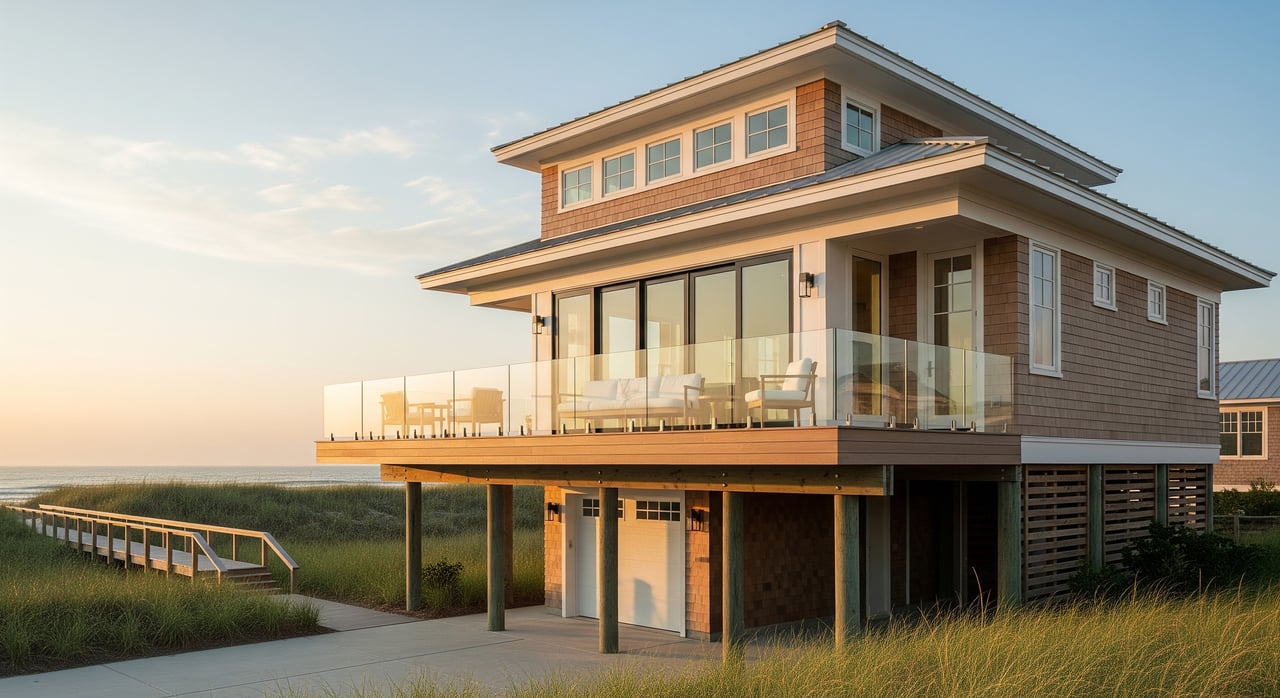
Most reverse-plan homes in Duck are built on pilings or piers. The ground level is often open or partially enclosed for parking, storage, outdoor showers, and mechanicals. Some designs include a small guest area, depending on code and flood requirements.
Top-level living features
The upper floor usually includes a kitchen with an island, a dining area, a great room with large windows or sliders, and a big deck or screened porch. The glazing is oriented to the ocean or sound. This is the “wow” level where you gather, cook, and watch the light shift across the water.
Bedroom level and circulation
Bedrooms cluster on the level below the great room, often with a secondary TV area, laundry, and direct access to outdoor showers and gear storage. Interior stairs are central, and many homes add an elevator to improve accessibility and guest convenience.
Built for the coast
Materials often include coastal-grade siding, corrosion-resistant fasteners, and elevated placement for HVAC and electrical systems. These choices help homes handle salt, wind, and moisture.
Everyday living: pros and tradeoffs
Pros
- Best views and natural light in your everyday living spaces.
- Better exposure to sea breezes and lower indoor humidity in pleasant weather.
- Clear separation between entertaining areas and bedrooms for privacy.
- Main living areas sit higher relative to flood risk.
Tradeoffs
- More stairs for daily life, which can be challenging with groceries, luggage, or mobility limits.
- Moving large furniture to the top level can be harder and costlier.
- Cleaning and laundry require more up-and-down movement.
- Safety planning matters more, including well-lit stairs, sturdy rails, and clear emergency egress.
Accessibility solutions
- Elevators or residential lifts sized for people and luggage.
- Non-slip treads, continuous handrails, and good lighting on all stairs.
- If feasible, at least one bedroom with a full bath on the main living level.
Codes, elevation, and insurance basics
Many Duck properties are regulated by floodplain standards and the National Flood Insurance Program. Lenders often require NFIP coverage for homes in mapped flood zones, and rates can improve when the lowest habitable floor sits above the base flood elevation.
- To understand a property’s flood zone, view federal flood maps through the FEMA Flood Map Service Center.
- For insurance basics and coverage options, start with FEMA’s flood insurance resources.
- An Elevation Certificate documents how high the home’s floors and systems sit relative to the base flood elevation. Ask for it during due diligence.
Permits and local rules
Construction and renovations must comply with state building codes and local rules for wind and flood resilience. Setbacks, dune protection, decks, and access paths can be regulated. To plan upgrades or an elevator addition, review county guidance and coordinate permits early. You can find local planning resources through Dare County Planning.
Rental performance and resale in Duck
Why renters like reverse plans
Guests tend to prioritize views and big social spaces. Top-level great rooms with decks can increase booking appeal and support stronger nightly rates. Be clear in rental listings about the number of stairs and whether an elevator is available to set accurate expectations.
How to market for sale
Highlight the top-floor view, deck size, and kitchen layout. Provide a floor plan that labels the living-on-top design so buyers know how the home lives. Share the Elevation Certificate, flood-insurance history, and any coastal-resilience improvements to build trust.
Upgrades that help ROI and resale
- Add or service an elevator to broaden your buyer and renter pool.
- Refresh the top-level kitchen, flooring, and decking for the biggest visual impact.
- Improve stair safety, lighting, and handrails.
- Elevate or protect mechanicals and document those improvements.
Buyer checklist: what to ask and inspect
- Elevation and insurance: Where is the lowest habitable floor relative to base flood elevation? Request the Elevation Certificate.
- Access: Is there an elevator now or space to add one? How many stair runs from ground to great room?
- Utilities: Where are the HVAC systems and electrical panels located relative to flood risk?
- Laundry and logistics: Is the laundry near bedrooms or the kitchen? How will groceries move from ground to the top level?
- Outdoor living: Are decks oriented to maximize views and manage sun and wind exposure?
- Rental rules: What are the local occupancy, tax, and rental requirements that apply to the property?
Seller checklist: prepare and position your home
- Listing media: Lead with the view and the top-level entertaining space. Include a labeled floor plan.
- Transparency: Disclose stair count and elevator details. Share service records.
- Access and safety: Improve lighting, handrails, and non-slip treads. Consider adding an elevator or creating a flexible guest space if feasible.
- Documentation: Provide the Elevation Certificate, flood-insurance history, and records of coastal-resilience upgrades.
Tips for rental owners and operators
- Set expectations: Clearly state the reverse layout and stair count in all guest materials.
- Gear staging: Create seating and storage at ground level for luggage and beach items.
- Safety: Invest in non-slip treads, sturdy rails, and bright, consistent lighting.
- Guest flow: Offer clear guidance for moving luggage and groceries. If possible, add an elevator or lift.
Is a reverse plan right for you?
If you value daily views, breezes, and a social top floor, a reverse plan in Duck can be a great fit. If stairs are a concern, look for an elevator or a layout with a bedroom and full bath on the main living level. Whether you plan to rent the home or live in it full time, clarity about elevation, access, and logistics will help you enjoy the benefits while managing the tradeoffs.
If you want tailored advice on how a specific Duck property will perform for your goals, reach out. You will get local guidance on elevation, insurance, rental potential, and smart upgrades that drive returns. Contact Crystal Swain to Book a Free Consult & Rental Analysis.
FAQs
What is a reverse floor plan in Duck?
- It flips the typical layout so the kitchen, dining, great room, and main deck are on an upper level, with bedrooms on lower levels to capture views, light, and breezes.
Why are reverse floor plans so common in the Outer Banks?
- The narrow barrier-island setting rewards height with better ocean or sound views, more daylight, and improved airflow, while elevated living helps manage coastal flood risk.
How do reverse plans affect flood insurance in Duck?
- Homes with the lowest habitable floor above base flood elevation can see insurance benefits. Always review the Elevation Certificate and check maps through the FEMA Flood Map Service Center.
Are reverse floor plans practical for full-time living?
- Yes, many owners live full time in these homes, but you should plan for stairs, consider an elevator, and set up laundry and storage to simplify daily routines.
What accessibility options exist for upside-down layouts?
- Common solutions include residential elevators, well-lit non-slip stairs with continuous handrails, and if feasible, a bedroom and full bath on the main living level.
How should a reverse-plan home be marketed for rentals?
- Emphasize views, deck space, and the top-floor great room, and clearly disclose stair counts and elevator details so guests can self-select appropriately.
What should buyers inspect before closing on a reverse-plan home?
- Verify the Elevation Certificate, test the elevator if present, assess stair safety, confirm deck and railing condition, and check the location of HVAC and electrical systems.
Which upgrades most improve rental revenue and resale value?
- Adding or updating an elevator, refreshing the top-level kitchen and decking, improving stair safety, and documenting flood-resilience improvements typically have the greatest impact.